
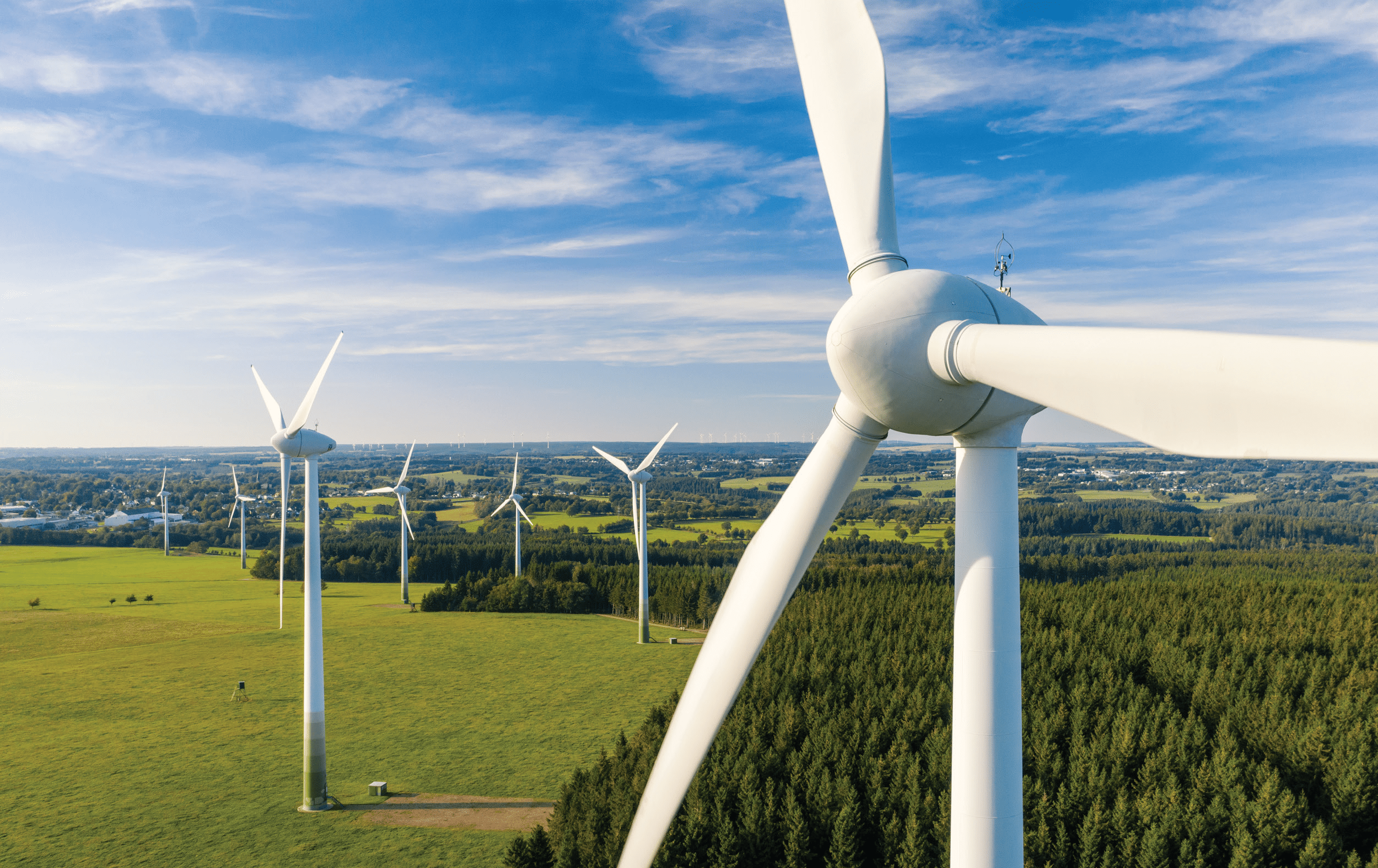
Energy companies and utilities operate some of the most geographically dispersed and operationally demanding infrastructure in the country. From power generation facilities and electrical substations to wind farms, solar installations and remote monitoring stations, these organizations depend on reliable communications to keep their operations running.
And increasingly, those communications depend on Internet connectivity.
Modern energy operations generate enormous amounts of information. Connected sensors collect equipment performance data. Remote monitoring platforms give operators visibility into facilities hundreds of miles away. Cloud-based applications support maintenance, analytics and business operations. Engineering teams exchange data between field locations and centralized offices.
As energy infrastructure becomes more connected, the network supporting it becomes increasingly important.
For energy companies and utilities, Internet access is no longer simply an administrative necessity. It’s a critical component of operational efficiency, infrastructure monitoring and business continuity.
That’s why many organizations are turning to dedicated internet access (DIA) to support their growing connectivity requirements.
Why Reliable Internet Access Connectivity Is Critical for Energy and Utilities
Energy and utility organizations have connectivity requirements that extend far beyond those of a traditional office environment. A utility provider may operate dozens or hundreds of geographically distributed facilities. A renewable energy developer may need to connect newly constructed wind farms in rural areas. A power generation company may rely on remote monitoring systems to collect operational information from equipment that employees rarely visit in person.
These organizations depend on connectivity for applications such as:
- Remote equipment monitoring and diagnostics
- Supervisory control and data acquisition (SCADA) system communications, where appropriately designed
- Industrial Internet of Things (IIoT) devices and sensors
- Real-time operational data collection
- Predictive maintenance and equipment analytics
- Cloud-based business and engineering applications
- Remote workforce communications
- Video surveillance and site security
- Data transfers between generation facilities and operations centers
- Coordination with contractors, utility partners and municipalities
Many of these applications require more than high download speeds. They need consistent network performance, dependable upload capacity and reliable communications between remote facilities and centralized systems.
When connectivity is unavailable, organizations may lose access to important operational information, experience delays in maintenance activities or face disruptions to business processes. For geographically distributed energy operations, reliable connectivity is therefore an important part of maintaining operational visibility and efficiency.
The Connectivity Challenges Facing Energy Companies
Energy companies face several challenges when sourcing and managing business Internet connectivity.
Remote and Rural Locations
Power generation facilities, wind farms and other energy infrastructure are frequently located far from major metropolitan areas. These locations may have limited telecommunications infrastructure, making it difficult to source high-speed business Internet. In some cases, the nearest existing fiber network may be miles away. Extending fiber to these locations can require substantial construction, engineering and coordination with network carriers.
High-Bandwidth Requirements
Energy facilities increasingly collect and transmit operational information through connected equipment and monitoring systems. Depending on the applications involved, organizations may need to support continuous data transfers, remote diagnostics, video surveillance and other bandwidth-intensive activities. Traditional Internet services may not provide the predictable performance these applications require.
Multiple Locations and Providers
An energy company operating facilities across several states may need to work with different telecommunications carriers at each location. Managing separate contracts, installation schedules, service agreements and support relationships creates additional administrative complexity.
Network Availability and Business Continuity
Network disruptions can affect communications between remote sites and centralized operations teams. For organizations that depend on continuous access to operational data, Internet redundancy and network availability should be important considerations when designing connectivity infrastructure.
What Is Dedicated Internet Access for Energy and Utilities?
Dedicated Internet Access (DIA) is a business Internet service that provides bandwidth reserved for a specific organization rather than shared with neighboring customers. Unlike traditional shared broadband services, DIA is designed to deliver more consistent performance, symmetrical upload and download speeds, and business-grade service commitments.
APX Net’s dedicated internet access solutions use fiber-based Ethernet connectivity to support organizations with demanding bandwidth, reliability and latency requirements.
For energy companies, these capabilities can provide a dependable foundation for remote monitoring, cloud applications, communications and other business-critical systems. DIA is particularly valuable at locations where fluctuating network performance could interfere with the timely transmission of operational information.
However, dedicated Internet access should not be confused with a private industrial control network. Utilities must still implement appropriate security controls, network segmentation and other safeguards for operational technology (OT) environments. For a more detailed explanation of the technology, read APX Net’s guide on how dedicated internet access works.
Key Benefits of Dedicated Internet Access for Energy Companies
More Predictable Network Performance
Energy organizations rely on dependable communications to access remote equipment information and support day-to-day operations. With shared broadband, available bandwidth can fluctuate based on network congestion and other factors.
Dedicated Internet provides committed bandwidth, helping organizations maintain more consistent application performance. This is especially valuable when multiple applications simultaneously transmit information between field locations and centralized systems.
Symmetrical Upload and Download Speeds
Many energy applications generate significant outbound network traffic. Connected sensors, monitoring equipment, video systems and analytics platforms may continuously upload information from remote facilities to centralized applications.
Traditional broadband connections frequently offer substantially lower upload speeds than download speeds. DIA provides symmetrical bandwidth, giving organizations equivalent upload and download capacity. This helps support the two-way movement of information required by modern energy operations.
Service-Level Agreements and Reliability
When Internet connectivity supports important business operations, reliability should be evaluated alongside bandwidth and cost. Dedicated Internet services typically include service-level agreements (SLAs) that establish performance and availability commitments. APX Net’s DIA includes an industry-leading 99.999% network uptime guarantee, providing organizations with contractual service assurances.
For utilities and energy companies, an SLA-backed connection can offer greater predictability than a best-effort broadband service. However, even a highly reliable primary connection can experience an interruption. Organizations should also consider secondary connections and other continuity measures.
Scalability for Expanding Energy Operations
Energy infrastructure continues to evolve as organizations expand renewable generation capacity, modernize facilities and deploy additional connected equipment. A connectivity solution that meets current requirements may need additional capacity as new applications and devices are introduced.
APX Net’s fiber-based DIA supports bandwidth ranging from 20Mbps to 400Gbps, allowing organizations to scale connectivity as requirements change. This flexibility is particularly valuable for energy developers bringing new facilities online or expanding existing operations.
Support for Network Redundancy
Energy companies should also evaluate what happens if their primary Internet connection becomes unavailable. A secondary connection can provide an alternate communications path when the primary circuit experiences an outage.
Depending on site requirements and available infrastructure, redundancy strategies may incorporate additional fiber circuits, fixed wireless connectivity or cellular backup services. Physical diversity is especially important. Two connections that share the same underlying infrastructure may still be vulnerable to a single incident.
For critical operational environments, Internet redundancy should be coordinated with the organization’s broader network architecture and business continuity requirements.
How APX Net Connected Remote Wind Farms for a Fortune 100 Energy Provider
APX Net has firsthand experience addressing these challenges. A Fortune 100 multinational electricity and gas provider was developing multiple wind farms in remote areas of the United States on behalf of electric utilities and municipalities. The company needed high-bandwidth connectivity to support remote equipment monitoring and operational data collection.
However, the wind farms were located miles from existing fiber infrastructure.
Major telecommunications carriers were initially unwilling to extend their networks to the facilities because the construction costs were difficult to justify for a limited number of customers. Some of the required fiber builds extended up to 10 miles. The energy company also needed connectivity established before handing the completed wind farms over to its customers, creating additional pressure to meet contractual deadlines.
APX Net developed a solution where other providers had declined to proceed.
Rather than relying on standard carrier quoting processes, APX Net worked directly with carrier executives to develop viable construction arrangements.
Its team presented the potential for additional business opportunities in the surrounding areas, helping carriers evaluate the longer-term value of extending their networks.
APX Net also worked through the energy company’s complex contracting and accounting requirements and secured financing to accelerate construction.
Once the agreements were finalized, APX Net managed the fiber deployments and installed 100Mbps symmetrical DIA connections using Type I carrier circuits at the wind farm locations.
The results included:
- Fiber-based DIA delivered to all required locations
- Wind farms brought online and handed over to customers on schedule
- High-bandwidth connectivity for remote monitoring and data analytics
- Reduced quoted construction costs for one of the fiber builds
- Additional opportunities to evaluate approximately two dozen more projects
The project demonstrates that remote geography does not necessarily have to prevent an energy organization from securing enterprise-grade fiber connectivity.
Read the complete case study: How APX Net Connected Remote Wind Farms for a Fortune 100 Energy Provider.
Why Type I DIA Circuits Matter for Energy Infrastructure
Not all dedicated Internet connections are designed the same way.
One important distinction is whether the service uses Type I or Type II circuits.
With a Type I DIA circuit, the same underlying carrier provides both the last-mile connection and Internet service. Type II circuits involve separate providers, introducing additional interconnection points and potentially greater complexity when troubleshooting service issues.
APX Net provisions Type I DIA circuits because they can provide advantages in installation coordination, latency, service quality and problem resolution.
For energy companies operating facilities across multiple geographic regions, these distinctions can be important.
A utility should not have to spend valuable time coordinating between multiple carriers to determine responsibility for a network issue. By sourcing Type I connectivity through leading carriers, APX Net helps simplify the experience while maintaining business-grade network performance.
Frequently Asked Questions About Internet for Energy & Utilities
Why do energy companies need dedicated Internet access?
Energy companies use dedicated Internet access to support remote monitoring, operational data collection, cloud applications and communications between geographically distributed facilities. DIA provides committed bandwidth, symmetrical speeds and business-grade service agreements that help support consistent network performance.
How do wind farms get Internet connectivity in remote locations?
Wind farms may use fiber, fixed wireless, cellular or other connectivity technologies depending on available infrastructure and operational requirements. When fiber is unavailable, providers such as APX Net can work with telecommunications carriers to engineer and coordinate new fiber construction to remote facilities.
Is dedicated Internet access better than broadband for utilities?
Dedicated Internet is generally better suited to utility applications that require predictable bandwidth, symmetrical speeds and contractual service commitments. Shared broadband may still be appropriate for less critical applications or as part of a backup connectivity strategy.
Can dedicated Internet access support SCADA systems?
Dedicated Internet can provide transport connectivity for certain SCADA-related communications when integrated into an appropriately secured network architecture. However, DIA alone does not provide the isolation, cybersecurity controls or operational guarantees required for critical industrial control systems.
How much bandwidth does an energy facility need?
Bandwidth requirements depend on the number of connected devices, monitoring applications, data transfer volumes, video systems and other workloads. Smaller monitoring sites may require relatively modest capacity, while larger facilities supporting multiple applications may need significantly more bandwidth. A network assessment can help determine appropriate capacity.
Can APX Net provide dedicated fiber Internet in rural areas?
Yes. APX Net works with leading telecommunications carriers to source and engineer fiber connectivity for business locations across the United States. Its experience includes coordinating new fiber construction to remote wind farms where major carriers initially declined to provide service.
Reliable Internet Connectivity for Your Energy Operations Starts Here
Whether you’re connecting a remote wind farm, expanding renewable energy infrastructure or standardizing Internet connectivity across multiple utility facilities, APX Net can help.
Discover how APX Net’s Dedicated Internet Access solutions deliver the performance, reliability and scalability your operations depend on.